
What are toxins?
A toxin is a harmful substance that can occur naturally or synthetically.
Natural toxins are usually produced by organisms as a line of defense. For example, plants may produce toxins to protect themselves against predators like animals, humans, and insects, while other organisms may produce toxins, like mold, to protect them from their surrounding environment.
Toxins can also be created synthetically or be products of our environment. Most synthetic toxins are chemicals and metals.
Where do toxins come from?
Today, more than ever before, we are constantly bombarded by toxins. Toxins, or external chemicals, are quite literally everywhere. From excessive sugar, to pollution to preservatives, we can be exposed to toxins at any time. They are even in our skincare products! Manufactured toxins are so common nowadays, it’s almost impossible to avoid them entirely.
How do toxins enter the body?
Toxins enter the body in a number of ways: breathing, drinking, eating, even walking outside. Simple everyday activities like applying body care products, putting on clothing, and wearing cosmetics can all leave us exposed to toxins. Just standing at the gas pump to fill your tank just one time exposes us to more toxins than someone who lived 200 years ago was exposed to in their entire life. Natural and artificial toxins are not only found in our food, water, air, homes, cars, etc. but they are also in pharmaceutical products and can be passed down genetically.
What do toxins do to your health?
The constant exposure to toxins create a build-up that can have adverse effects on our overall health and well-being.
When our bodies cannot properly eliminate all of the toxins we are exposed to, some toxins may begin to build up in the body and cause damage and disease. Too many toxins in the body for too long of a time may lead to the following:
- Chronic inflammation
- Damage to cell membranes and organs
- Depletion of nutrient stores
- Displacement of structural minerals that may result in weaker bones
- Exacerbate organ dysfunction
- Harm to DNA, which can potentially increase the rate of aging and degeneration
- Impaired ability of the body to naturally detox on its own
- Inhibition or poisoning of enzymes so they do not function properly
- Interference with hormones that may cause hormone imbalances
- Modification of genes and metabolic expression
- Negative effects on blood sugar
- Reduced brain activity
- Cancer
When initially exposed to too many toxins, the body may try to expel toxins through natural detox processes like diarrhea, coughing, sneezing, urination and vomiting. Some people may even experience more severe reactions like heartburn, nasal congestion, rashes, and sore throat. Others may begin to notice changes in body odor, excessively oily skin, and fatigue. Overall, we may just feel off, but some other symptoms of an overload of toxins may include but are not limited to the following:
- Anxiety
- Bloating
- Brain fog
- Headaches
- Cravings for carbohydrates or sugar
- Decreased energy levels
- Depression
- Digestive distress
- Disorientation
- Eczema
- Exhaustion
- Feeling spacey and/or sluggish
- Impaired sleep
- Inability to concentrate and focus
- Joint aches and pains
- Memory difficulties
- Pimples
- Puffiness
- Stressed
- Trouble losing weight
- Water retention
Can the body eliminate toxins?
Thankfully, the human body has the natural ability to tolerate a certain amount of toxins and eliminate them. Our cells are inherently programmed to attempt to eliminate substances that are harmful to our bodies and cannot be used. Human processes like bowel movements, breathing, and sweating, can all help eliminate and rid our systems of toxins. We even have major organs that help filter out unwanted substances – the kidneys and liver.
However, our bodies are not designed to deal with the unprecedented levels of invasive chemicals, pollutants, and toxins that we are exposed to on a daily basis just by simply existing and living our lives. We can’t always control the world around us or our exposure to all types of toxins we encounter, but we can make strategic changes that can help counter the effects of toxins.
How to remove toxins from your body?
An easy way to remove toxins from the body is to focus on eating a real whole foods diet teeming with foods that are known for their detoxing abilities. Some examples include: berries, beets, bone broth, cruciferous vegetables, dandelion leaf and root, fermented foods, green tea, herbs, and spices like garlic and ginger, leafy greens, lemon zest, and sea vegetables. Drinking lots of clean water is also essential to eliminate toxins.
If you had a considerable toxic load on your scan, we will recommend products to help remove toxin and possibly something to bind the toxins and help activate the lymph system.
Keep in mind that as you begin to address toxins in the body, you may feel worse and have increased symptoms for a time. This can be a normal part of detoxing. Taking a binder, such as activated charcoal, as part of your protocol can help relieve detox reactions. Feel free to contact us for information on the best way to use a binder.
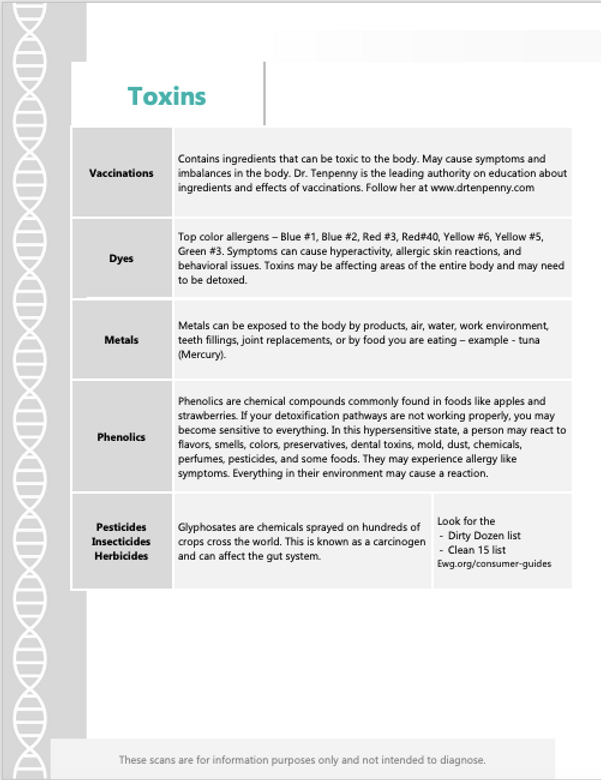
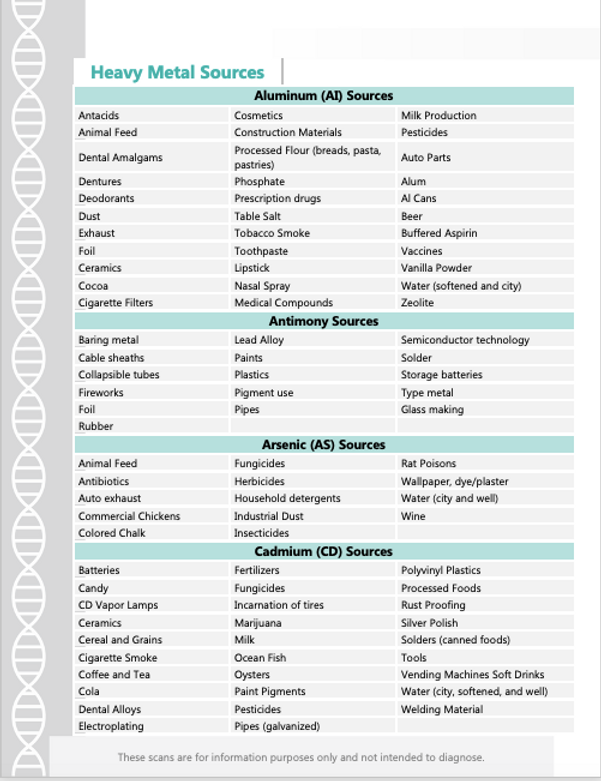
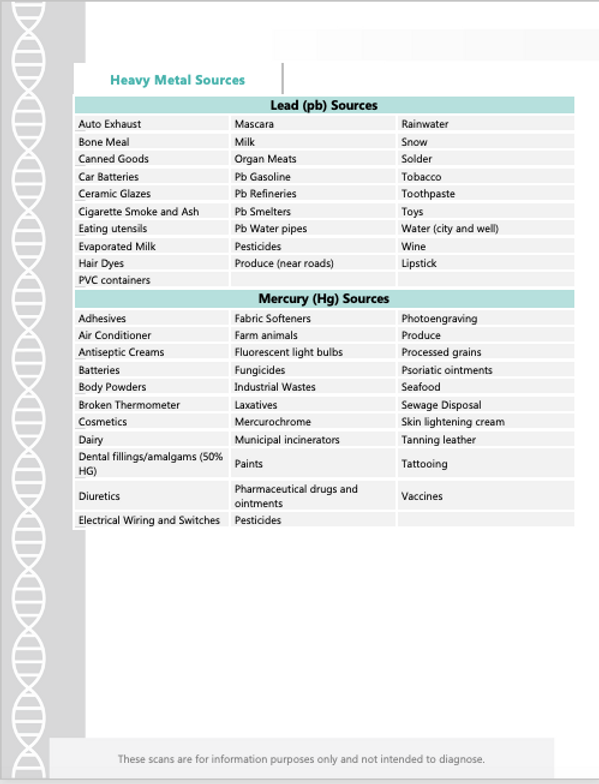
Below is a list of common toxins and heavy metals often found on our scans.